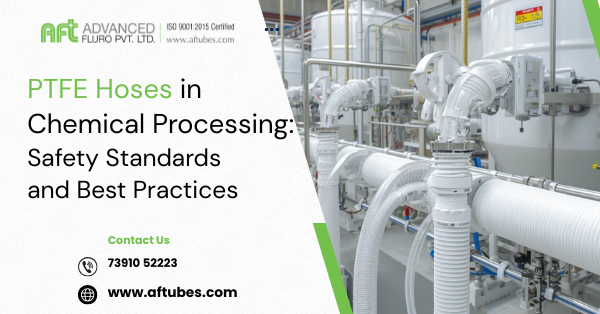
When it comes to handling aggressive chemicals in industrial environments, the choice of transfer equipment can mean the difference between safe operations and catastrophic failures. PTFE hoses in chemical processing applications have become the gold standard across manufacturing facilities worldwide, offering unmatched chemical resistance, temperature stability, and reliability that traditional rubber or metal hoses simply cannot match.
Why PTFE Dominates Chemical Processing
Polytetrafluoroethylene (PTFE) represents one of the most chemically inert materials available to modern industry. Its molecular structure creates incredibly stable carbon-fluorine bonds that resist attack from nearly all industrial chemicals, including concentrated acids, bases, solvents, and oxidizing agents. This resistance extends across temperatures from -70°C to +260°C, making PTFE hoses suitable for both cryogenic and high-temperature applications.
In chemical processing facilities, engineers consistently choose PTFE hoses because they eliminate contamination risks associated with reactive materials. When transferring ultrapure chemicals or pharmaceutical-grade substances, even microscopic contamination can ruin entire batches. PTFE’s non-reactive surface ensures product purity remains intact throughout the transfer process.
Essential PTFE Safety Standards
The chemical industry operates under strict regulatory oversight, and PTFE safety standards have evolved to address unique challenges in chemical transfer operations. Understanding these standards isn’t just about compliance—it’s about protecting workers, facilities, and the environment.
Key Compliance Requirements
FDA 21 CFR 177.1550 certification is essential for pharmaceutical and food-grade applications, ensuring PTFE materials meet purity requirements for human consumption or contact. For chemical processing plants producing pharmaceuticals or food additives, this certification is non-negotiable.
USP Class VI testing validates biocompatibility, particularly important in pharmaceutical manufacturing where product safety is paramount. This rigorous protocol ensures PTFE materials won’t leach harmful substances into processed chemicals.
ISO 1307 and EN 12115 standards address pressure ratings, dimensional tolerances, and performance specifications for industrial hoses. These international standards help engineers select appropriately rated hoses for specific operating conditions.
For operations involving static-sensitive chemicals or flammable solvents, conductive PTFE hoses meeting static dissipation standards prevent dangerous electrostatic buildup that could trigger explosions or fires.
Pressure and Temperature Ratings
Matching hose specifications to actual operating conditions is critical for safety. Working pressure typically ranges from 150 PSI for unreinforced smooth bore hoses to over 3,000 PSI for convoluted PTFE hoses with stainless steel braiding. The burst pressure is generally four times the working pressure, but operating near maximum ratings significantly reduces hose lifespan.
Temperature extremes also affect pressure ratings. While PTFE maintains chemical resistance across wide ranges, mechanical strength decreases at elevated temperatures. Always consult manufacturer specifications and apply appropriate safety factors when designing chemical transfer systems.
Construction Types and Applications
Smooth Bore vs. Convoluted PTFE
Smooth bore PTFE hoses feature a seamless interior surface offering easier cleaning for sanitary applications, reduced particle entrapment, and lower pressure drop. Pharmaceutical manufacturers and food processors typically prefer smooth bore construction where cleanliness is paramount.
Convoluted PTFE hoses have a corrugated interior providing exceptional flexibility. The convolutions allow tight bending without kinking, making installation easier in confined spaces. For general chemical processing where flexibility matters more than cleanability, convoluted hoses offer practical advantages at lower costs.
Reinforcement Options
Single wire braid suits low to medium pressure applications up to 1,000 PSI—economical for gravity-feed systems or low-pressure transfers.
Double wire braid extends pressure ratings to 3,000 PSI or higher, suitable for pumped systems and high-pressure applications with improved crush resistance.
Vacuum-rated constructions incorporate spiral wire reinforcement to prevent collapse under vacuum conditions, essential for suction applications or vacuum distillation processes.
PTFE Best Practices for Installation
Proper installation significantly impacts PTFE hose performance and safety. Even the highest-quality hose will fail prematurely if installed incorrectly.
Bend Radius Considerations
Every PTFE hose has a minimum bend radius specification—typically 3 to 6 times the hose outer diameter. Exceeding this limit causes the PTFE liner to crack or buckle, creating leak paths and overstressing wire reinforcement. Use hose supports or guides to maintain proper bend radius throughout the hose run.
End Fitting Selection and Assembly
The connection between hose and fitting represents the most common failure point. Reusable fittings allow field assembly using compression mechanisms, but require careful installation following manufacturer torque specifications. Permanent crimped fittings offer superior reliability for critical applications through hydraulic crimping that creates a permanent mechanical connection.
Material selection matters equally. Stainless steel fittings (316L grade) provide excellent corrosion resistance for most applications. For exotic chemicals or extreme conditions, consider specialty alloys like Hastelloy or titanium.
System Design Considerations
Avoid torsion by ensuring hoses move freely during thermal expansion without twisting. Plan for thermal expansion by providing adequate slack in long hose runs. Implement proper support using hangers or brackets at recommended intervals. Consider chemical compatibility end-to-end, remembering that O-rings, gaskets, and valve components must also resist the chemicals being transferred.
Inspection and Maintenance Protocols
Establishing systematic protocols helps identify potential problems before they cause failures.
Visual Inspection Schedule
Implement monthly inspections for critical process hoses and quarterly inspections for less critical applications. Check for exterior damage, fitting integrity, hose routing changes, and unusual staining. Document all inspections with dates, findings, and corrective actions.
Performance Testing
Pressure testing at 1.5 times working pressure confirms the assembly maintains its rating. Leak detection using appropriate methods identifies small leaks before they become hazards. Flow rate monitoring can indicate internal degradation or blockage.
Replacement Criteria
Replace PTFE hoses when there’s visible damage, any signs of leakage, approaching manufacturer-recommended service life (typically 2-5 years), changes in process requirements exceeding specifications, or failed testing. Proactive replacement costs far less than emergency repairs after failures.
Industry-Specific Applications
Pharmaceutical Manufacturing
Pharmaceutical applications demand the highest purity standards. Smooth bore PTFE hoses with sanitary fittings facilitate CIP (clean-in-place) and SIP (sterilize-in-place) procedures. Complete documentation tracing components to raw materials supports FDA validation requirements.
Petrochemical Processing
Petrochemical facilities require conductive PTFE hoses to prevent static electricity buildup during solvent transfer. High temperature capability supports processes involving hot solvents, while large diameter options handle bulk chemical transfers efficiently.
Specialty Chemical Production
Producers of aggressive specialty chemicals must verify compatibility for unusual substances. Ultrapure applications may require PFA-lined fittings to prevent contamination. Quality systems often necessitate individual hose identification and batch traceability.
Troubleshooting Common Issues
Premature liner failure typically results from excessive bending, temperature cycling, chemical attack, or manufacturing defects. Fitting leakage stems from improper installation, fitting corrosion, vibration loosening, or thermal cycling. Flow problems may indicate liner collapse, partial blockage, undersized hoses, or multiple restrictions.
Cost-Benefit Analysis
While PTFE chemical industry hoses cost more upfront than alternatives, total cost of ownership strongly favors PTFE. Extended service life (3-5 times longer than rubber), reduced downtime, and lower contamination costs provide direct savings. Indirect benefits include improved worker safety, environmental protection, simplified regulatory compliance, and operational flexibility.
Conclusion
PTFE hoses represent the optimal solution for chemical processing applications where safety, reliability, and performance cannot be compromised. By understanding PTFE safety standards, following PTFE best practices during installation and maintenance, and selecting appropriate constructions for specific applications, chemical facilities achieve years of trouble-free operation.
The initial investment in quality PTFE hoses for chemical processing pays dividends through extended service life, reduced downtime, improved safety, and enhanced product quality. For facilities considering upgrading to PTFE hoses, partnering with experienced manufacturers like Advanced Fluro ensures access to the latest technology and reliable supply of quality products that meet the rigorous demands of modern chemical processing.