When it comes to industrial fluid transfer systems, choosing the right PTFE hose material can make all the difference between operational excellence and costly downtime. Polytetrafluoroethylene, commonly known as PTFE, has earned its reputation as the gold standard in hose manufacturing, offering unmatched performance across demanding applications. But what makes this fluoropolymer so special, and why should your business consider PTFE hoses for critical operations?
What exactly is PTFE?
PTFE is a synthetic fluoropolymer discovered accidentally by Roy Plunkett at DuPont in 1938. While you might recognize it by the brand name Teflon, PTFE’s applications extend far beyond non-stick cookware. In industrial settings, this remarkable material has revolutionized how we handle corrosive chemicals, extreme temperatures, and high-purity processes.
At the molecular level, PTFE consists of carbon atoms surrounded by fluorine atoms, creating one of the strongest bonds in organic chemistry. This unique structure is what gives PTFE its extraordinary characteristics that make it ideal for hose applications.
The Outstanding Properties of PTFE
Chemical Resistance That’s Second to None
One of the most impressive properties of PTFE is its virtually universal chemical resistance. PTFE hoses can safely handle:
- Strong acids like sulfuric acid and hydrochloric acid
- Caustic bases including sodium hydroxide
- Aggressive solvents such as acetone and MEK
- Oxidizing agents and reactive chemicals
- Petroleum products and hydraulic fluids
This means you can use the same PTFE hose for multiple applications without worrying about chemical degradation, swelling, or contamination. For facilities handling diverse chemicals, this versatility translates to reduced inventory costs and simplified maintenance schedules.
Temperature Extremes? No Problem
PTFE maintains its structural integrity across an impressive temperature range of -200°C to +260°C (-328°F to +500°F). Whether you’re transferring cryogenic liquids or high-temperature steam, PTFE hoses maintain their flexibility and performance without becoming brittle or softening.
Non-Stick Surface Characteristics
The same properties that make PTFE famous in cookware benefit industrial hoses too. PTFE’s extremely low coefficient of friction means:
- Fluids flow smoothly with minimal pressure drop
- Reduced buildup of residues and contaminants
- Easy cleaning and maintenance
- Lower risk of bacterial growth in pharmaceutical applications
Electrical Insulation
PTFE is an excellent electrical insulator, making it safe for applications where static discharge or electrical conductivity could pose risks. This property is particularly valuable in electronics manufacturing and explosive environments.
Key PTFE Advantages in Industrial Applications
Purity and Contamination Prevention
For industries where purity is paramount—pharmaceuticals, food and beverage, semiconductors—PTFE hoses offer unmatched cleanliness. The material doesn’t leach chemicals into the fluids passing through, ensuring product integrity from start to finish. This is why FDA-compliant PTFE hoses are the preferred choice for food-grade applications.
Long Service Life
While PTFE hoses may have a higher upfront cost compared to rubber or PVC alternatives, their exceptional durability delivers superior long-term value. The PTFE advantages include:
- Resistance to UV degradation and weathering
- No hardening or cracking over time
- Immunity to chemical attack
- Reduced replacement frequency
Flexibility and Ease of Installation
Modern PTFE hoses, especially corrugated designs, offer excellent flexibility while maintaining pressure ratings. This makes installation easier, reduces the need for multiple fittings, and allows for routing in tight spaces where rigid piping would be impractical.
Safety in Hazardous Environments
PTFE is non-flammable and produces minimal smoke even at extreme temperatures. In facilities handling flammable liquids or operating in explosive atmospheres, this safety margin can be critical.
Diverse PTFE Applications Across Industries
Chemical Processing
Chemical plants rely on PTFE hoses to safely transfer aggressive acids, solvents, and reactive compounds. The material’s inertness ensures both worker safety and process purity.
Pharmaceutical Manufacturing
From active pharmaceutical ingredients (APIs) to sterile water systems, PTFE hoses meet stringent regulatory requirements for cleanability and non-reactivity. Their smooth bore prevents bacterial harboring, making them ideal for clean-in-place (CIP) systems.
Food and Beverage Production
FDA-approved PTFE hoses handle everything from dairy products to alcoholic beverages without imparting taste, odor, or contamination. Breweries, wineries, and food processors depend on PTFE for maintaining product quality.
Automotive and Aerospace
High-performance vehicles and aircraft use PTFE hoses for fuel lines, hydraulic systems, and brake fluid transfer. The material’s reliability under extreme conditions is essential for safety-critical applications.
Semiconductor Manufacturing
Ultra-high-purity PTFE hoses transport aggressive chemicals and gases used in chip fabrication without introducing contaminants that could ruin sensitive electronic components.
Medical and Laboratory Equipment
From analytical instruments to patient care devices, PTFE hoses ensure precise fluid delivery without interference from the tubing material itself.
Comparing PTFE with Alternative Materials
While rubber, PVC, and other polymer hoses have their place, PTFE stands apart when performance cannot be compromised:
- vs. Rubber: PTFE offers superior chemical resistance and temperature range
- vs. PVC: PTFE handles much higher temperatures and doesn’t plasticize
- vs. Stainless Steel: PTFE provides flexibility, lighter weight, and equivalent corrosion resistance at lower cost
- vs. EPDM: PTFE resists a broader spectrum of chemicals
Choosing the Right PTFE Hose Configuration
PTFE hoses come in several configurations to match specific needs:
- Smooth bore PTFE: Ideal for maximum flow and easiest cleaning
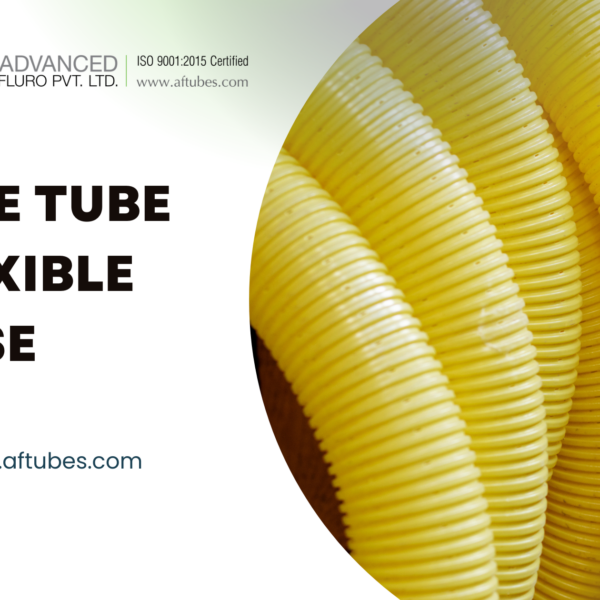
- Convoluted PTFE: Offers enhanced flexibility for tight routing
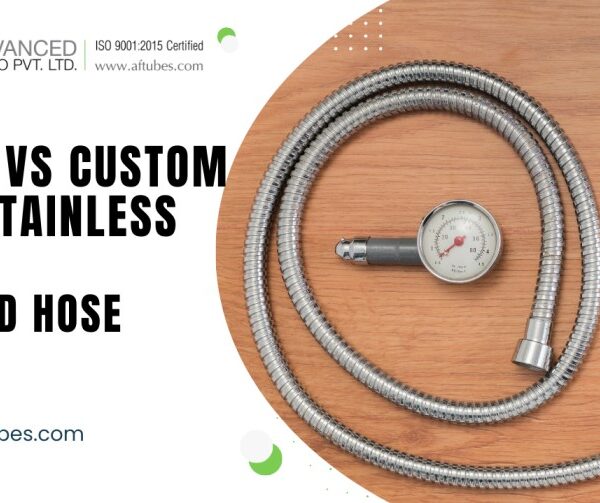
- Braided PTFE: Stainless steel braiding adds pressure rating and physical protection
- Composite constructions: Combine PTFE with reinforcement layers for extreme pressure applications
Making the Smart Investment
When evaluating PTFE hose material for your applications, consider the total cost of ownership rather than just purchase price. Factor in:
- Extended service life reducing replacement costs
- Eliminated downtime from chemical-related failures
- Reduced maintenance and cleaning requirements
- Improved product quality and reduced waste
- Enhanced safety for personnel and facilities
Partner with PTFE Expertise
At Advanced Fluoro Pvt. Ltd., we understand that selecting the right hose material is crucial for your operational success. Our range of PTFE hoses is engineered to deliver the performance, reliability, and safety your applications demand. Whether you’re dealing with corrosive chemicals, extreme temperatures, or stringent purity requirements, our technical team can help you specify the ideal PTFE solution.
Conclusion
The unique properties of PTFE—from exceptional chemical resistance to extreme temperature tolerance—make it the ultimate choice for demanding hose applications. While many materials claim versatility, PTFE delivers proven performance across the widest range of conditions and industries.
Understanding the PTFE advantages and diverse PTFE applications helps you make informed decisions that protect your processes, personnel, and profitability. When failure is not an option, PTFE hose material stands ready to meet your most challenging requirements.
Ready to upgrade to PTFE? Contact Advanced Fluoro today to discuss how our PTFE hoses can enhance your operations.