When chemical processing plants and pharmaceutical facilities face corrosion failures in their fluid transfer systems, the cost goes beyond equipment replacement—production downtime, contamination risks, and safety hazards multiply the damage. For Indian industrial engineers seeking reliable, chemically resistant solutions, PTFE tube flexible hose has emerged as the gold standard for handling aggressive chemicals, high temperatures, and demanding pressure conditions.
Advanced Fluro Pvt Ltd, an ISO 9001:2015 certified manufacturer based in Mumbai, specializes in producing premium-quality PTFE flexible hoses designed specifically for India’s diverse industrial requirements. Our PTFE tube flexible hose solutions combine exceptional chemical resistance with mechanical durability, serving critical applications across chemical, pharmaceutical, oil & gas, and automotive sectors throughout India.
What is a PTFE Tube Flexible Hose?
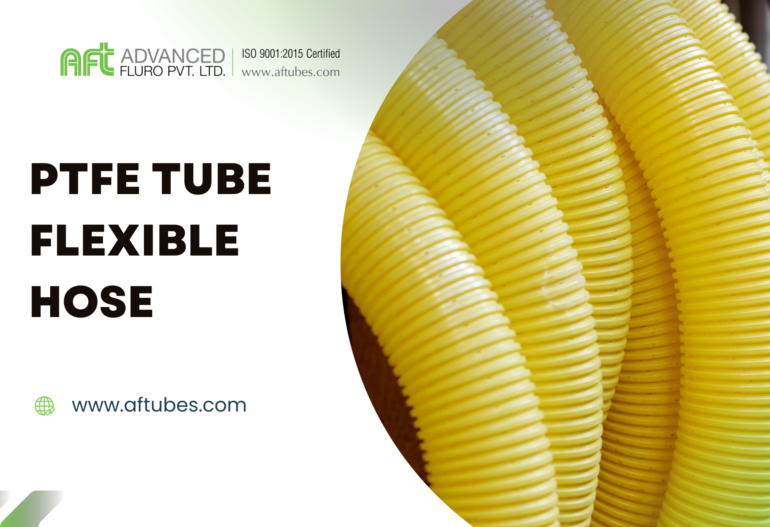
A PTFE tube flexible hose consists of a smooth-bore polytetrafluoroethylene (PTFE) inner tube, typically reinforced with stainless steel wire braiding or external support, and often covered with a protective outer layer. This construction delivers unmatched chemical compatibility whilst maintaining flexibility for complex piping layouts.
Technical Construction of PTFE Flexible Hoses
Inner Core: Seamless PTFE tube providing chemical inertness and smooth fluid flow
Reinforcement Layer: Stainless steel (SS304 or SS316) wire braid for pressure resistance and mechanical strength
Outer Cover: Optional PVC, silicone, or stainless steel cover for additional protection against abrasion and external contamination
This multi-layer design allows PTFE tube flexible hose to withstand operating temperatures from -70°C to +260°C whilst handling pressures up to 350 bar, depending on size and construction specifications.
Why Indian Industries Choose PTFE Tube Flexible Hose
Manufacturing facilities across Gujarat, Maharashtra, Tamil Nadu, and Karnataka increasingly specify PTFE flexible hose pipe for critical fluid handling applications. The technical advantages make it indispensable:
- Universal Chemical Resistance: PTFE remains inert to virtually all industrial chemicals, acids, alkalis, and solvents, eliminating contamination risks in pharmaceutical and chemical processing
- Extreme Temperature Performance: Maintains structural integrity and flexibility from cryogenic temperatures to +260°C, crucial for steam and hot chemical applications
- Non-Stick Surface: Smooth PTFE bore prevents product buildup, ensuring consistent flow and easy cleaning—essential for food-grade and pharmaceutical compliance
- Flexibility and Installation Ease: Unlike rigid PTFE piping, flexible hoses accommodate vibration, thermal expansion, and equipment movement without stress cracking
- Low Maintenance Requirements: PTFE’s chemical stability and durability significantly reduce replacement frequency compared to rubber or PVC alternatives
Common Industrial Applications of PTFE Flexible Hoses in India
Chemical Processing Plants
Chemical manufacturers across India rely on PTFE tube flexible hose for transferring concentrated acids (sulphuric, hydrochloric, nitric), caustic solutions, and organic solvents. The zero-permeation characteristic of PTFE prevents chemical degradation and maintains product purity—critical for speciality chemical production.
Pharmaceutical Manufacturing
Pharmaceutical facilities require absolute contamination prevention. PTFE flexible hose pipe meets stringent FDA and USP Class VI standards, making it ideal for active pharmaceutical ingredient (API) transfer, solvent recovery systems, and sterile processing applications.
Oil & Gas Industry
Refineries and petrochemical complexes use PTFE tube flexible hose for hydraulic systems, chemical injection lines, and sampling applications where hydrocarbon compatibility and high-pressure ratings are essential.
Automotive and Manufacturing
Paint spray systems, brake fluid transfer, and hydraulic applications in automotive manufacturing benefit from PTFE’s resistance to automotive fluids, paint solvents, and cleaning chemicals.
Critical Selection Factors: How to Choose the Right PTFE Tube Flexible Hose
Engineering teams must evaluate multiple technical parameters when specifying PTFE flexible hoses for industrial applications:
- Working Pressure and Temperature Range
Always verify the hose’s pressure rating matches your system’s maximum operating pressure with adequate safety margin. For high-temperature applications above 200°C, consider additional factors like thermal expansion and end-fitting material compatibility.
- Chemical Compatibility
Whilst PTFE resists nearly all chemicals, the braiding material and end fittings may have limitations. Stainless steel braiding (SS316) offers superior corrosion resistance for aggressive chemical environments compared to SS304.
- Size and Length Requirements
PTFE tube flexible hose is available in sizes ranging from 6mm to 100mm inner diameter. Proper sizing ensures optimal flow velocity whilst minimising pressure drop. Advanced Fluro offers custom lengths to minimise waste and installation complexity.
- End Fitting Configuration
Select appropriate end connections (flanged, threaded, tri-clamp, or quick-disconnect) based on your existing system infrastructure. Stainless steel fittings provide longevity in corrosive environments.
Common Engineering Mistakes to Avoid with PTFE Flexible Hoses
Mistake 1: Exceeding Minimum Bend Radius
PTFE hoses have specified minimum bend radii. Excessive bending causes kinking, flow restriction, and premature failure. Always consult manufacturer specifications and use proper support brackets.
Mistake 2: Ignoring Pressure Surge Conditions
Pump starts, valve closures, and process upsets create pressure spikes far exceeding normal operating pressure. Select hoses rated for 4:1 safety factor minimum to prevent catastrophic failures.
Mistake 3: Poor Installation Practices
Twisting the hose during installation reduces service life dramatically. Mark orientation during fitting and maintain proper alignment. Avoid contact with sharp edges that can abrade the outer cover.
Advanced Fluro’s PTFE Tube Flexible Hose Solutions
As a leading PTFE flexible hose supplier in Mumbai, Advanced Fluro Pvt Ltd manufactures comprehensive PTFE tubing solutions designed for Indian industrial requirements. Our ISO 9001:2015 certified manufacturing facility ensures consistent quality and technical performance.
Our PTFE Flexible Hose Product Range
- Smooth Bore PTFE Hoses: Standard and convoluted designs for general chemical transfer applications
- Braided PTFE Hoses: Single or double stainless steel braiding for high-pressure hydraulic and chemical systems
- Covered PTFE Hoses: External PVC or silicone covers for enhanced abrasion resistance and color-coding
- Custom Assemblies: Complete hose assemblies with stainless steel fittings, flanges, or specialized connections to your exact specifications
Beyond PTFE tube flexible hose, we manufacture complementary products including PTFE tubes, FEP tubes, and PFA tubing for applications requiring different performance characteristics.
Why Choose Advanced Fluro for PTFE Flexible Hoses?
- ISO 9001:2015 Certified Manufacturing: Rigorous quality control ensures every PTFE tube flexible hose meets international standards and your specifications
- Custom Engineering Support: Our technical team assists with hose selection, sizing calculations, and application-specific recommendations
- Competitive Pricing for Indian Market: Direct manufacturer pricing eliminates intermediary costs whilst maintaining premium quality
- Fast Delivery Across India: Strategic Mumbai location enables prompt shipment to industrial centers across Maharashtra, Gujarat, Tamil Nadu, Karnataka, and beyond
- Complete Testing and Documentation: Pressure testing, dimensional verification, and material certification with every order
- Customization Capabilities: Custom lengths, fitting configurations, and special constructions for unique industrial requirements
PTFE Tube Flexible Hose vs. Alternatives: Technical Comparison
PTFE vs. Rubber Hoses
Whilst rubber hoses cost less initially, they degrade rapidly when exposed to aggressive chemicals, require frequent replacement, and cannot withstand PTFE’s temperature range. For critical chemical applications, PTFE’s superior longevity delivers lower total cost of ownership.
PTFE vs. PVC Hoses
PVC hoses offer limited chemical resistance and temperature capability (typically -10°C to +60°C). They become brittle in cold conditions and soften in heat—unsuitable for pharmaceutical or high-temperature chemical processing.
PTFE vs. Stainless Steel Hard Piping
Rigid stainless steel piping cannot accommodate thermal expansion, vibration, or equipment movement. PTFE flexible hose pipe provides system flexibility whilst maintaining chemical inertness and pressure capability, significantly reducing installation complexity and maintenance.
Get Expert Support for Your PTFE Flexible Hose Requirements
Selecting the right PTFE tube flexible hose ensures system reliability, reduces maintenance costs, and prevents costly production interruptions. Whether you require standard PTFE flexible hose pipe for chemical transfer or custom-engineered solutions for specialised applications, Advanced Fluro’s technical expertise and manufacturing capabilities deliver the performance your operations demand.
Our comprehensive range includes PTFE tubes, braided PTFE hoses, FEP tubes, and PFA tubing—all manufactured under strict ISO 9001:2015 quality standards at our Mumbai facility. We serve industrial clients across India with competitive pricing, custom specifications, and prompt technical support.
Contact Advanced Fluro Today:
- Phone: +91-73910 52223
- Email: contact@aftubes.com
- Website: www.aftubes.com
Request detailed technical specifications, pricing quotations, or engineering consultation for your PTFE flexible hose requirements. Our team responds promptly to all enquiries with expert guidance tailored to your industrial application.